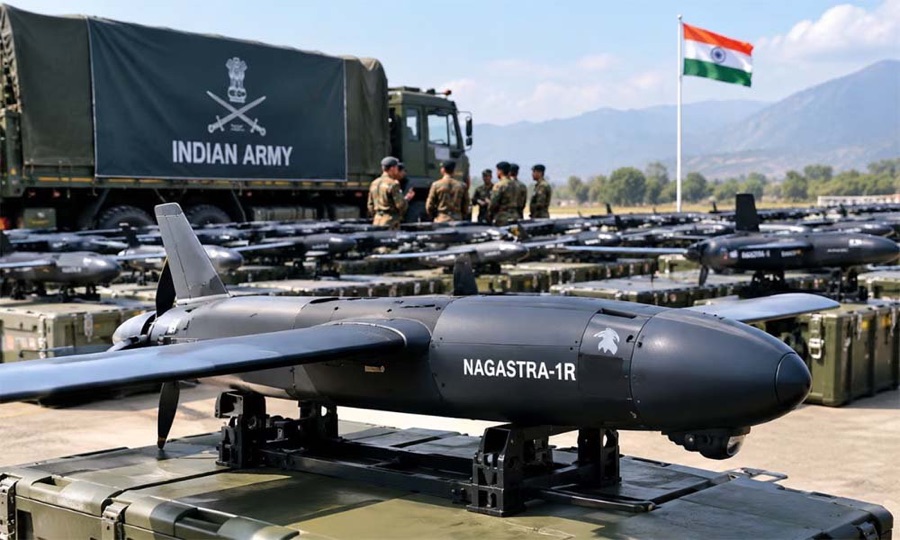
Solar Defence and Aerospace delivered 450 Nagastra-1R loitering munitions to the Indian Army, reported as the largest single-batch supply of such weapons to the Army.
The Indian Air Force hosted Dronathon-2026 at the Pokhran Field Firing Range from 14 to 16 September, giving domestic makers a stage for live demonstrations of unmanned and counter-drone systems.
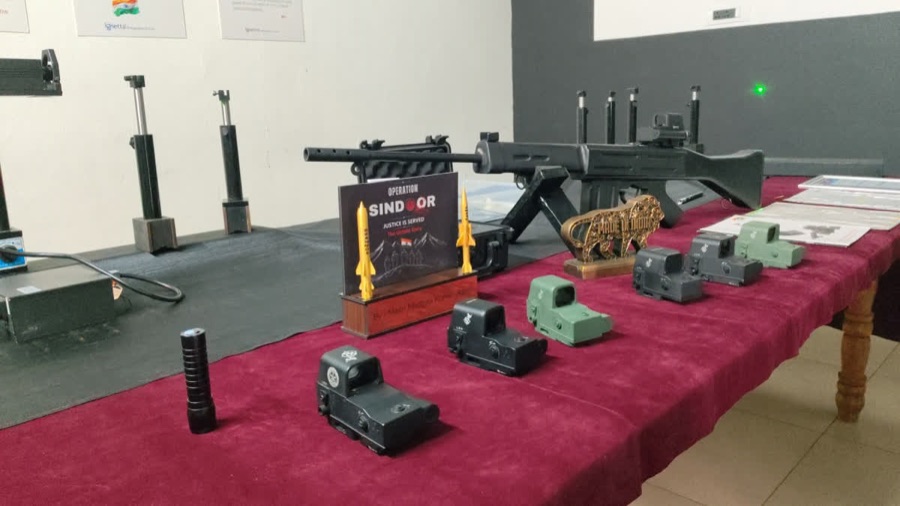
Ignetta Holographic has developed an Indian-made holographic weapon sight using DRDO-designed technology and has already supplied it to the Indian Army.
The Army chose Meprolight's fixed 6x MEPRO X6 as the daytime optic for its NEGEV machine guns. Under a technology transfer with RRP Defense the sights will be produced in India and supplied via BEL.
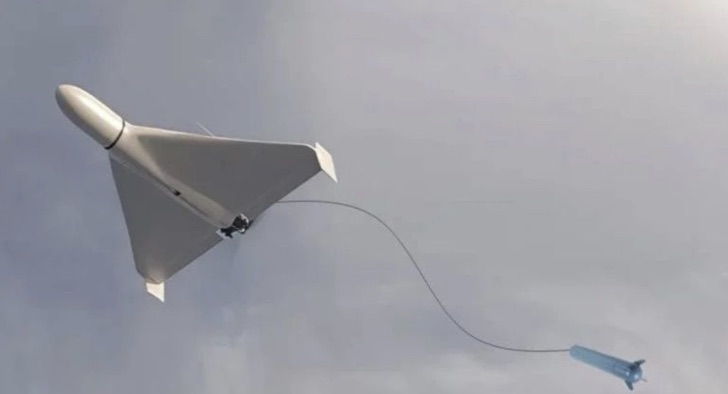
The Ministry of Defence signed contracts worth about ₹1,577 crore with Tata Advanced Systems and NIBE for 840 loitering munitions, bought under the Buy (Indian) category.
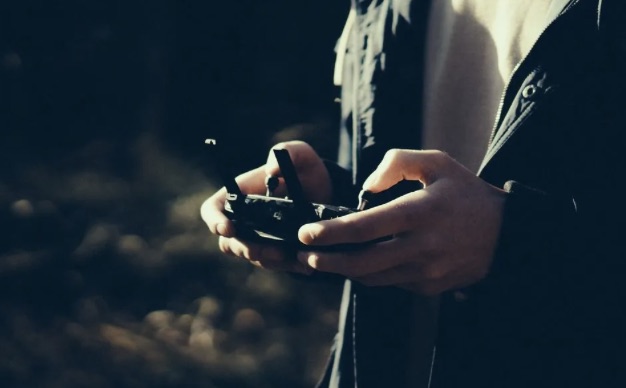
Flying the drone and sending its sensor video back to the operator both depend on radio links that must hold up over the whole mission range.
Link quality
A drone is only as useful as its connection to the ground. Two flows travel over that connection: commands going up to the aircraft, and telemetry and sensor video coming back down to the operator.
Each has different needs. Control commands are small but must arrive reliably and with low delay. Video needs far more bandwidth, so it is usually the first thing to degrade as range grows or interference rises.
In defence use the link must also cope with a contested radio environment. Frequency choice, antenna placement, encryption and the ability to keep working when signals are degraded all matter as much as raw range.
Good systems also plan for losing the link entirely, with clear, predictable behaviour such as holding position or returning along a safe route.
Guide
First or second focal plane? Choosing a reticle
Where the reticle sits inside a variable-power riflescope changes how it behaves when you zoom, and which one suits a mission.
First focal plane
Second focal plane
Drag the slider: the FFP reticle grows with the target, the SFP reticle stays the same size.
In a variable-magnification riflescope the reticle can sit in one of two places along the optical path: the first focal plane (FFP), in front of the zoom erector, or the second focal plane (SFP), behind it.
In a first focal plane scope the reticle grows and shrinks with the image. Its markings stay true at every magnification, so holdovers and range estimates work at any zoom setting.
In a second focal plane scope the reticle stays the same size as you zoom. It is easy to see at low power, but its markings are only correct at one specified magnification.
Neither is better in every case. FFP suits shooters who range and hold at varying zoom; SFP suits fast, close work where a bold, constant reticle matters most.
Article
Seeing in the dark: thermal vs night vision
Two technologies let sensors work at night, but they detect very different things. Understanding the difference helps match the sensor to the task.
⟷
Drag across the image: night vision amplifies faint light; thermal shows heat, so the person and the warm engine stand out.
Image intensification, often called night vision, collects the small amount of light that is still present at night, from the moon, stars or distant sources, and amplifies it into a visible image.
Thermal imaging works differently. It detects infrared energy that objects emit as heat, so it needs no light at all and can see warm targets through darkness, smoke and light foliage.
Each has strengths. Night vision shows familiar detail such as text and terrain texture; thermal makes people, vehicles and engines stand out against a cooler background.
Many modern payloads combine visible-light (EO) and thermal (IR) channels, so the operator can switch, or fuse the two, as conditions change.
Let's discuss your requirements
Our team will help define the system best suited to your operational needs.